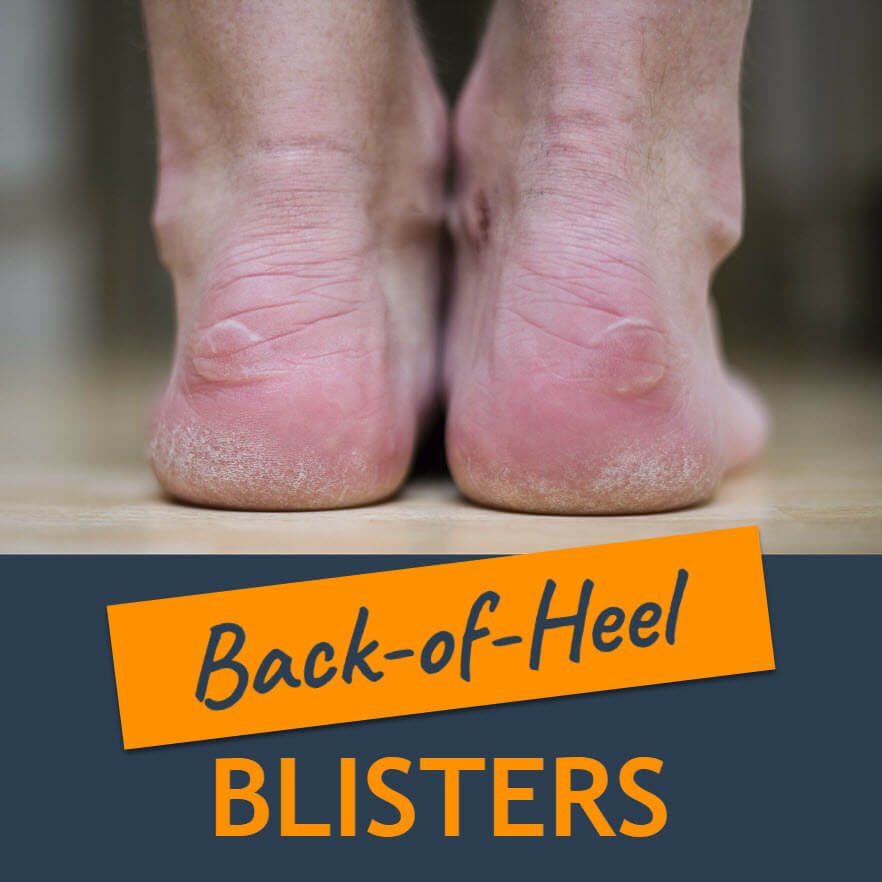
A back of heel blister is one of the most common and most miserable foot blisters you can get.
If you’ve ever had one, you already know how quickly it can go from “just a sore spot” to something that changes the way you walk, cuts a hike short, or makes sport miserable. These blisters are especially common in everyday people who spend a lot of time on their feet, as well as walkers, hikers, soccer players, and anyone breaking in new shoes.
In fact, blisters at the back of the heel are the most common type of heel blister by far. There are two other kinds of heel blisters - blisters under the heel and heel edge blisters - but this article is all about the back of heel blister: why it happens, why some people get them so easily, and what actually helps.
The Real Impact of a Back of Heel Blister
A back of heel blister might sound minor, but anyone who’s suffered through one knows just how painful and limiting it can be.
One of my customers, Marcus, described it perfectly after I helped him find the right solution before walking Tasmania’s Overland Track:
In 30 years of bushwalking in Tasmania I have never completed a walk of any distance without some kind of heel blister - on this trip I survived 6 days and 70 kilometres of walking carrying a 25 kilo pack without ANY blister of ANY kind... The upshot of all of this is that I was able to enjoy the walk and that my wife and children were along for the trip with me. Under normal circumstances I would have been in quite serious discomfort after day three and basically become totally self-absorbed for the last 3 days enduring the pain.
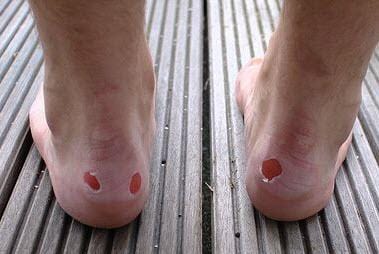
That’s what a bad back of heel blister does. It doesn’t just hurt. It changes your whole experience.
Why I Became So Focused on Heel Blisters
Back of heel blisters are also personal for me.
They were my most common blister, and they’re the reason my quest to understand everything about blisters started in the first place. I tried all the usual strategies. Some helped a bit. Some made intuitive sense but didn’t really solve the problem. And some worked far better than I ever expected.
That’s what pushed me to look deeper into the mechanics of blister formation and why this spot is so vulnerable.
Why a Back of Heel Blister Happens
The back of the heel is a problem area because of the way the heel bone moves inside the shoe during walking and running.
At heel strike, the heel moves downward relative to the back of the shoe. Then later in the gait cycle, it lifts again. That repeated up-and-down movement creates stress in the soft tissues at the back of the heel. Over time, if the stress is high enough and repeated often enough, the skin gets injured and a blister forms.
There’s also usually a small normal bony prominence slightly toward the outer side of the heel. That’s why many back-of-heel blisters form a little to the outside rather than dead-centre. In some people, that bump is larger, known as Haglund’s deformity, which can make a back of heel blister even more likely.
What the Research Shows
Research helps explain why some people get heel blisters so easily while others don’t.
In a 2013 study from the University of Salford, researchers deliberately produced blisters on the back of the heels of 30 participants under controlled conditions. One person blistered after just 4 minutes, while the last person took 32 minutes. That’s a huge difference and shows just how blister-prone some people are compared to others. Read the study here.
The researchers also referred to an earlier pilot study using high-speed slow-motion video analysis. That work found around 15 mm of heel displacement relative to the back of the shoe at heel strike. That’s a lot of movement. The heel moves down relative to the shoe at heel strike, then up again through the rest of the gait cycle, then down again at the next heel strike.
So if you’ve ever wondered why your heel gets hammered during walking, hiking, or sport, the research backs that up.
Back of Heel Blister Prevention: What Actually Helps
While these are the most popular preventions, make no mistake, you can and should use some kind of prevention when you're treating a back of heel blister.
Some work better than others, that's for sure - and I'll detail the pros and cons of each so you can choose the one that's best for you.
1. Heel-Lock Lacing
How it works
A heel-lock lacing technique helps secure the heel better and can reduce excessive heel lift.
Pros
- Easy to try
- Costs nothing
- Can improve shoe hold
Cons
- Only works if your shoes have laces
- Doesn’t always solve the problem completely
My take
This is worth trying because it can help reduce heel movement that can become abrasive. But in my own experience, I found it helpful, but it wasn’t always enough to stop a recurring back of heel blister. BTW, here's how to do it with hiking boots.
2. Taping
How it works
Taping helps protect the skin by spreading the shear load over a wider area.
Pros
- Tape is easy to access
- eg: Fixomull Stretch, RockTape, paper tape, moleskin
- Can be enough for some people
Cons
- Needs regular reapplication
- Can loosen with sweat
- Doesn’t stop every blister for every person
My take
Most people have an overinflated expectation about how effective taping should be at preventing blisters. That's because they think blisters are caused by rubbing - which they aren't - which is the Big Blister Misconception.
Having said that, a lot of people find taping is all they need. I wasn’t that lucky. Taping helped me a bit, but there are many of us who blister undeneath a perfectly good heel taping.
If you keep getting a heel blister despite tape, it doesn’t mean you’re doing it wrong. It just means you may need a different approach - you need to use something that reduces the internal shear distortion at the back of the heel better than taping can. Especially if you’re blister-prone.
3. Blister Wool
How it works
Blister wool absorbs blister-causing shear. You tear off a large piece and stuff it down your sock so it covers the back of your heel.
Pros
- Easy to use
- Soft, comfortable and compacts down
- A very natural protection
Cons
- You need a new piece every day
My take
Blister wool can be very handy. It's my back up for situations where the next product, ENGO Patches, are not an option.
4. ENGO Blister Patches
How they work
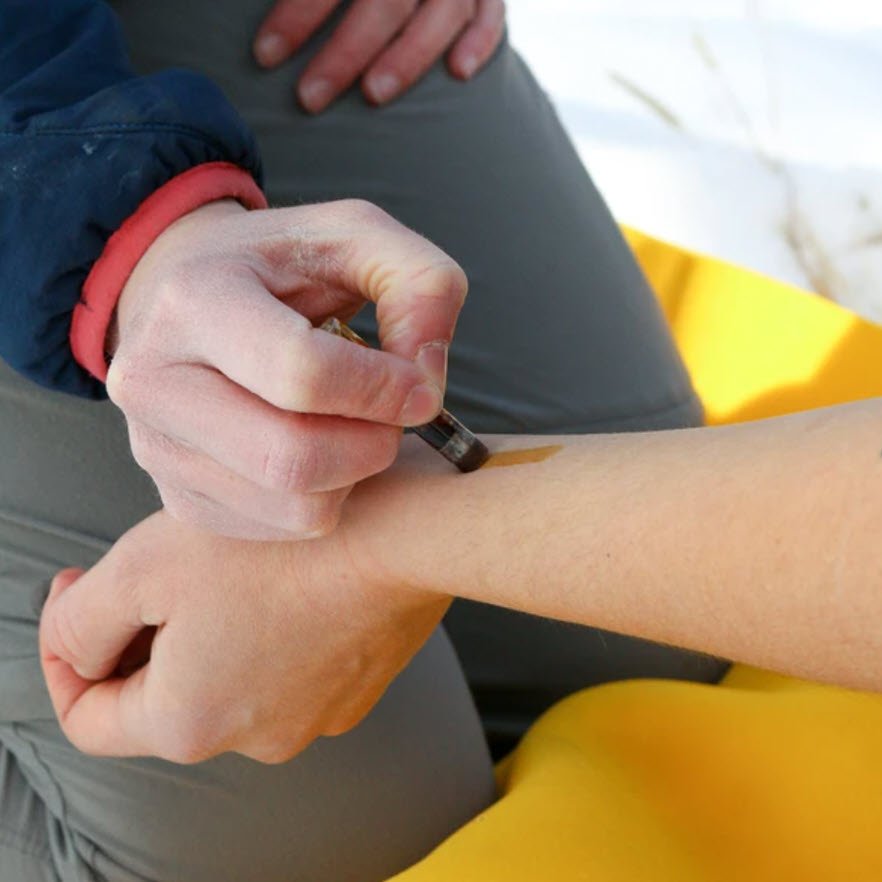
ENGO Blister Patches stick inside your shoe and create a low-friction surface at the point where the shoe would otherwise irritate the heel.
Pros
- THE most effective prevention and treatment for even the worst heel blisters
- Applied to the shoe, not the skin
- Each patch will last months
- Very thin, so they don’t change the fit of your shoe
- Sweat-proof
Cons
- Need to be applied properly to ensure longevity
- Top edges can loosen and peel if you don't protect the patch as you push your foot into your shoe
- Waterlogging may loosen the patch
My take
This is the best form of heel blister protection I’ve found, including for really troublesome recurring heel blisters.
This is also where my own blister journey changed. Discovering how well ENGO worked for the back of my heel was what really kicked my blister quest into gear, because I wanted to understand why it worked so much better than the other things I’d tried.
If you just did one thing for a recurring back of heel blister, this would be the one I’d recommend. The ENGO Heel Pack is especially useful because the patches are shaped for the heel area. If you wear boots, grab the Rectangle patches and round the edges so they look more like an oval - this will ensure you'll protect the right area.
5. PelliTec Blister Prevention Pads
How they work
PelliTec blister pads work in a few different ways at once. They cushion the area, absorb some shear, and may slightly reduce friction.
Pros
- Applied to the shoe
- Repositionable, at least a few times
- Back of heel is one of the best spots to use these
- Better than a heel grip at prevneting back of heel blisters
Cons
- The edges are a little thick - though usually unnoticeable
- Durability is a little less than ENGO Patches
- While the pad is 4.5cm in diameter, the area of blister protection is 2.5cm.
My take
Some people really like them, as you'll read here. My own experience was that they irritated a little and didn't relieve blister-causing shear enough, especially compared to ENGO. I suspect the alignment of the top layer weave may be important - position the pad so the weave runs up-and-down rather than side-to-side (I could be wrong, this is just my take, the product owners couldn't verify this).
6. Reduce Stride Length (Foot Strike Angle)
How it works
Overstriding increases compression and therefore frictional force in the skin at the back of the heel, at heel strike. A slightly shorter stride (ie: increase step rate, smaller foot strike angle) can help reduce that impact and make a back of heel blister slightly less likely, assuming you do have a long stride (you may not, and therefore this may not be relevant).
Pros
- Simple concept
- Especially relevant for walkers and hikers
Cons
- Takes awareness and practice
- Can feel unnatural at first
- May not be enough on its own
My take
This is often overlooked, but it makes good sense. If you’re taking long strides and hitting the ground hard with your heel out in front of you, you’re increasing the load at the back of the heel. Shortening your stride slightly can help reduce that stress. It may not be enough on its own to fix a recurring back of heel blister, but it can absolutely be a useful part of the overall solution. It's a better compensation than avoiding heel strike and trying to walk on the ball of your foot instead. Feel free to watch the below snippet from a presentation to podiatrists.
What's Our Pick For Back-of-Heel Blisters?
The most effective preventative strategy for even the worst back of heel blisters is undoubtedly the ENGO Blister Patches, even if you have a Haglunds deformity. They’re the things that keep me blister-free day in day out, without having to pad or tape my skin all the time. The other strategies will help for sure, but the ENGO patches are the best, in my humble opinion.